
2026年1月6日19:00-21:00,北京师范大学社会性科学议题学习(SSI-L)项目组在腾讯会议举行在线研讨活动,重点交流了各合作校在社会性科学议题教学实践(SSI-L)中的进展、挑战与未来规划。本次会议由北京师范大学中国基础教育质量监测协同创新中心科学提升部主任、SSI-L项目组负责人林静主持,学科指导专家及四所合作校的教师团队在线参与。
在研讨活动中,各合作校就正在推进的议题进行了分享与讨论。来自北京市石景山区海特花园小学顾立文首先分享了关于“吃糖会引发糖尿病吗”的议题实践。该议题基于“问题链、活动链、素养链”三链融合的模式,已开发出跨学科整合的设计框架并进行了试讲与迭代,形成了较为完备的单元内容。其核心挑战在于如何对学生提出的多元探究问题进行有效分类,以及在适配不同年级学生时,课程设计应采取“给定大框架的拼盘式设计”还是“先结构化再设计”的路径,仍需深入探讨。
其次,杭州市下沙中学江艳春以杭州钱塘大湾区湿地为教学切入点,分享了关于“湿地保护与可持续发展”议题的设计构想,详细介绍了该议题诞生的背景及涵盖湿地生态、功能、历史与未来四个单元的跨学科课程框架等方面的内容。其引申的核心疑问在于,如何确保该议题具备足够的社会争议性以激发学生的探究欲,以及如何在驱动学生的行动动机与引导其科学解决方案之间找到平衡点。
接着,北京师范大学亚太实验学校胡海军汇报了该校在项目推进过程中遇到的困难。胡老师提到,目前亚太实验学校的SSI-L课程实施分为线上和线下两部分,有一定的灵活性,但是仍存在学生管理混乱和分层教学效果不佳的难题,显示出课程设计和实际执行间的落差,需要在进一步实施中得以重视与解决。
随后,杭州市橄榄树学校黄子樾汇报了关于“校园少塑派”议题的课程实施进展。该课程遵循“体验—探究—认知—创造—行动”的逻辑,设计了超市调查、实验探究、参观环保企业及模拟听证会等活动。回顾为期一学期的实践历程,黄老师认为当前阶段面临的主要问题有:学生因年级和认知水平差异导致的参与度不均;课程频率较低(每两周一次)影响了探究的连续性与热情;以及在“认知”阶段,对学生科学建模能力的系统性培养尚有不足。
围绕上述实践案例,与会者展开了深入评议。学科指导专家、山东省威海市教育教学研究院原初中教研室主任张涛就SSI的选择标准提出建议,他认为SSI的核心特性在于其开放性、无单一标准答案,并涉及科学事实之外的社会价值与认知冲突等方面,而其“社会性”应体现在引导学生进行价值判断,落实立德树人根本任务上。SSI-L项目负责人林静也对议题讨论的开放性与灵活性做出强调,她指出SSI-L的核心在于培养学生应对不确定性的能力,其学习目标应超越知识与能力,指向“学科核心观念”、“跨学科概念”以及“态度与责任”的培育。此外,针对各合作校在推进过程中遇到的问题,林静与张涛都给予了十分中肯的建议,为后续的项目推进明确了行动方向。
最后,本次会议在SSI-L项目负责人林静的总结发言中圆满结束。林静再次肯定了各合作校团队在项目实践过程中取得的阶段性成果与付出,鼓励各校团队通过共议共益继续深化议题设计,将已有的SSI-L教学实践转化为学术产出,为更多学校提供参考经验,共同推进教育共同体建设。
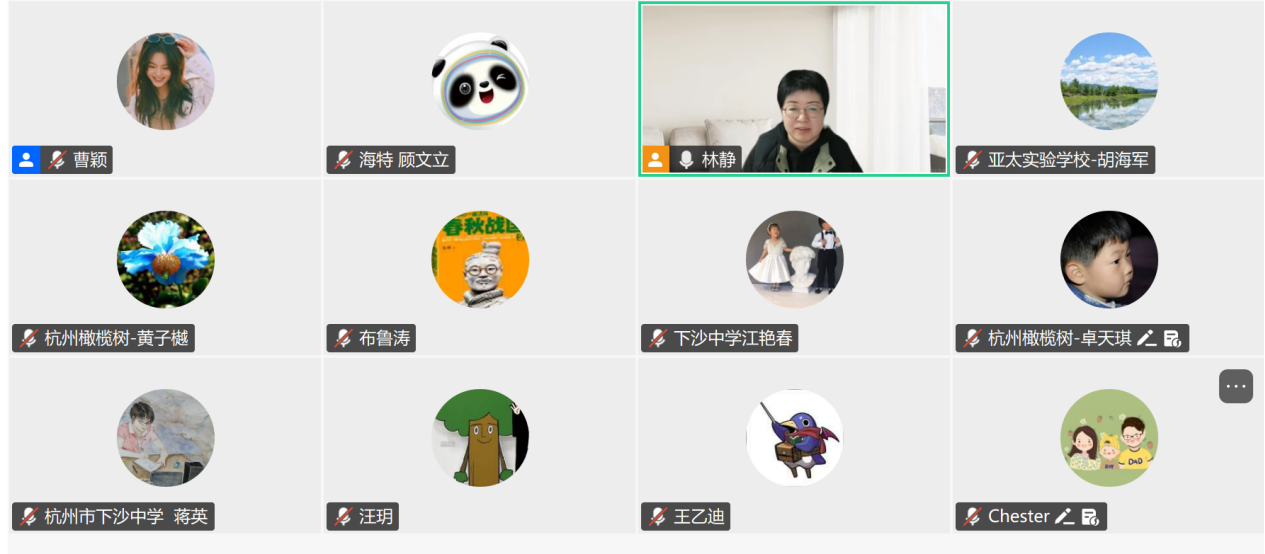
On January 6, 2026, from 19:00 to 21:00, the Socio-Scientific Issues-based Learning (SSI-L) Project Team at Beijing Normal University conducted a seminar via Tencent Meeting. The session discussed the progress, challenges, and future directions of partner schools in implementing SSI-L in their classrooms. The event was led by Lin Jing, the Director of the Department of Improving Science Education at the Collaborative Innovation Center of Assessment for Basic Education Quality Monitoring and the PI of the SSI-L Project. Participants included project discipline advisors and teacher teams from four partner schools.
During the seminar, the partner schools shared and discussed the issues they are currently addressing. Gu Liwen, from Haite Huayuan Primary School in Shijingshan District, Beijing, first presented a case study on the issue: “Does eating sugar cause diabetes?” Based on a model integrating the “question chain, activity chain, and competency chain,” the project has developed an interdisciplinary framework that has undergone trial teaching and iterative refinement, resulting in a comprehensive unit design. The core challenges lie in effectively categorizing the diverse questions students raise and in determining whether the course design for different grade levels should adopt a “modular design within a given framework” or follow a “framing first, then designing” approach, both of which require further in-depth exploration.
Secondly, Jiang Yanchun from Hangzhou Xiasha Middle School presented their ideas on instructional design for “wetland protection and sustainable development,” using the Hangzhou Qiantang Dawan Wetland as a place-based instructional site. She elaborated on the background of this issue and the interdisciplinary curriculum framework, which comprises four units: wetland ecology, wetland functions, wetland history, and future prospects. The core questions arising from this initiative are: how to ensure that the issue has sufficient socio-scientific controversy to stimulate students’ inquiry motivation, and how to balance driving students’ action orientation with guiding them toward scientifically sound solutions.
Subsequently, Hu Haijun from the Asia-Pacific Experimental School of Beijing Normal University reported on the challenges encountered during the school’s project implementation. Mr. Hu noted that the current SSI-L curriculum at the Asia-Pacific Experimental School is delivered through a hybrid model combining online and offline components, offering some flexibility. However, ongoing challenges involve student management problems and less-than-ideal results in differentiated instruction. These challenges highlight a disconnect between curriculum design and real-world implementation, requiring careful attention and resolution in future efforts.
Following that, Huang Ziyue from Hangzhou Olive Tree School reported on the progress of implementing the curriculum addressing the “Campus Plastic Reduction Initiative.” This curriculum follows the pedagogical logic of “experience–inquiry–cognitive–creation–action” and incorporates activities such as supermarket surveys, experimental inquiries, visits to environmental protection enterprises, and mock hearings. During the one-semester practice, Ms. Huang highlighted the main challenges: uneven student participation caused by varying grade levels and cognitive skills, decreased continuity and enthusiasm for inquiry because the course is held only once every two weeks, and a lack of systematic development of students’ scientific modeling skills during the “cognitive” stage.
Following the presentation of the practical cases above, the participants engaged in an in-depth discussion and critical review. Zhang Tao, the project discipline advisor and former Director of the Junior High School Teaching Research Office of the Weihai Education and Teaching Research Institute in Shandong Province, offered suggestions on the selection criteria for SSI. He contended that the fundamental traits of SSI include its open-ended nature, lack of a definitive correct answer, and its interaction with social values and cognitive conflicts beyond mere scientific facts. Additionally, he highlighted that the "social" aspect of SSI should be incorporated into helping students develop value judgments, thus supporting the core goal of promoting virtue through moral education. Lin Jing, the PI of the SSI-L Project, also underscored the significance of openness and flexibility during issue-based discussions. She emphasized that the main focus of SSI-L is to develop students' ability to handle uncertainty, and that its learning goals should go beyond mere knowledge and skills. Instead, they should aim to foster "disciplinary core ideas," "crosscutting concepts," and "attitudes and responsibilities.” In addition, both Lin Jing and Zhang Tao provided very pertinent suggestions addressing the challenges encountered by the partner schools during implementation, thereby clarifying the direction for subsequent project advancement.
Finally, the meeting concluded successfully with a closing summary from Lin Jing, the PI of the SSI-L Project. Lin Jing again affirmed the phased achievements and efforts of the partner schools' teams in the project implementation process. She urged the school teams to further enhance their curriculum design through collaboration, to turn existing SSI-L teaching practices into academic outputs, and to share transferable experiences with more schools, thereby collectively advancing the development of an educational community.