
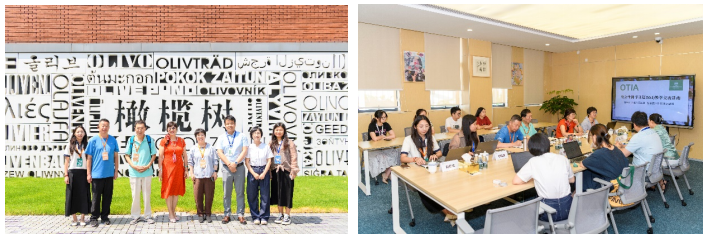
2025年9月3日,北京师范大学“社会性科学议题学习(SSI-L)”项目专家团队在负责人林静的带领下,携手国际科学教育权威、科学素养提升联盟副主席、台湾师范大学荣誉教授邱美虹,北京市物理特级教师、央视科学顾问彭梦华,北京市特级教师、北京教育科学研究院特聘教学指导专家李伟臣等一行,赴杭州橄榄树学校开展为期两天的社会性科学议题(SSI)教学深度研讨与课程共建活动。杭州橄榄树学校总校长邱锋、初中部校长唐诗杰和初中MYP协调员杨盈等校领导与教师团队共同参与。
顶尖专家领航,共探SSI教学新方向
本次活动汇聚了科学教育领域的多位顶尖专家。林静作为社会科学议题学习项目的负责人,从其跨学科学习设计框架出发,为课程提供了坚实的理论支撑;邱美虹结合系统建模与科学素养提升的前沿理念,拓展了教学的国际视野;彭梦华以工程师思维和丰富的教具开发经验,助力课程在真实问题解决中落地;李伟臣则从基础教育实践出发,为SSI教学注入了深厚的课堂实施智慧。
课堂社会联动,构建SSI教学新样本
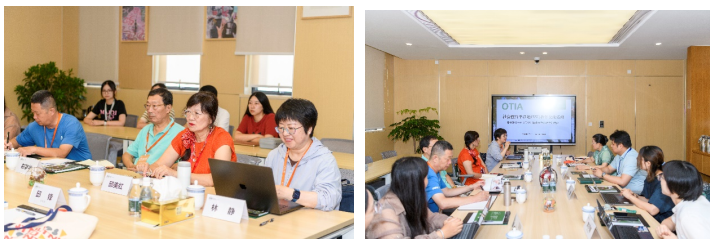
教师团队在专家指导下进一步完善单元设计的细节,并开展了SSI试水课的教学观摩。课堂中教师通过“塑料海洋”短片、“一日塑料足迹”记录等活动引发学生情感共鸣与认知冲突,借助KWL表搜集学生对塑料的前概念和兴趣点,为后续的探究定下方向,也为之后的单元驱动性问题的优化提供更多参考。课后,专家从情境创设、问题引导、学生课堂讨论的组织以及社会性论证推进等多个维度进行点评,为课程实施提出具体改进建议,助力教师将课程框架转化为更加真实、生动的课堂实践,初步构建了可推广的SSI教学样本。
双线并进融合,规划系统教学新路径
专家团队基于橄榄树学校的实际,从理论层面梳理了SSI教学的核心要素与实施路径,引导教师围绕“校园少塑派”这一贴近学生生活的社会性科学议题,从学生视角引入、社会性科学建模、社会性科学推理等能力培养、跨学科衔接、评价方式等维度展开深度研讨,形成教学共识与课程推进基本原则。在专家团队的引领下,橄榄树学校SSI团队逐步构建出以“塑料的一生”为线索,层层递进的四个教学单元设计框架,体现了从全球视野到身边议题、从感知到决策的双线融合路径。
系统思维贯穿,培育学科社会新认知
本课程突出“化繁为简,以简育繁”的设计理念,强调在研究过程中收集证据、平台记录讨论轨迹,实现“教学即研究”的双线融合。通过社会性科学建模(SSM)与推理(SSR),帮助学生跳出片段化认知,逐渐形成对塑料议题的系统思考;借助CER论证训练与模型运用,提升学生的科学叙事力、模型建构力和论证表达力,推动认知从片段走向链接。
此次项目不仅是杭州橄榄树学校在社会性科学议题学习中的一次深度突破,也是学校全面启动社会性科学议题学习的历史性节点,同时还为区域层面开展社会性科学议题教育提供了系统而具体的课程样例。专家团队充分肯定了该课程在推动学生从“学科认知”迈向“社会决策”方面的前瞻价值,期待其成为SSI教学推广的典型实践案例。学校也表示将进一步完善课程细节、积累过程素材,推动SSI教学从试点走向常态,培养具有科学理性与社会情怀的未来公民。
供稿:杭州橄榄树学校
Hangzhou, September 3, 2025 — The expert team from Beijing Normal University’s “Socio-Scientific Issues-based Learning (SSI-L)” project, led by Project Director Professor Lin Jing (林静), visited Olive Tree International Academy, Hangzhou, for a two-day intensive seminar and co-development program on socio-scientific issues (SSI) teaching. The delegation included internationally renowned science education scholar Professor Chiu Mei-Hung (邱美虹), Vice Chair of the Alliance for Improving Scientific Literacy (AISL) and Emeritus Professor at National Taiwan Normal University; Peng Menghua (彭梦华), National Distinguished Physics Teacher of Beijing and Science Consultant for China Central Television (CCTV); and Li Weichen (李伟臣), National Distinguished Teacher of Beijing and Senior Instructional Advisor at the Beijing Academy of Educational Sciences. School leaders, including school Principal Qiu Feng (邱锋), Middle School Principal Tang Shijie (唐诗杰), and MYP Coordinator Yang Ying (杨盈), participated alongside the SSI-L teaching team.
Leading Experts Chart New Directions for SSI Teaching
The event convened top experts in science education to explore innovative approaches for SSI instruction. Lin Jing, as the PI of the SSI-L project, provided a solid theoretical foundation using the interdisciplinary curriculum design framework. Mei-Hung Chiu broadened the international perspective with insights into system modeling and scientific literacy. Peng Menghua contributed his engineering mindset and extensive experience in teaching tool development to support real-world problem solving. Li Weichen infused the initiative with classroom wisdom grounded in long-standing practice in basic education.
Linking Classroom and Society: A New SSI Teaching Model
Under expert guidance, the Olive Tree teaching team refined unit design details and conducted a pilot SSI lesson. Classroom activities included screening the short film Plastic Ocean and recording a “One-Day Plastic Footprint,” which sparked emotional resonance and cognitive dissonance among students. Using KWL charts, teachers gathered students’ prior conceptions and interests, which helped shape subsequent inquiry and optimize driving questions.
Following the lesson, experts provided multi-dimensional feedback on context design, problem framing, classroom discussion, and socio-scientific argumentation, offering concrete suggestions to transform curriculum frameworks into authentic, dynamic classroom practice. This laid the foundation for a replicable SSI teaching model.
Integrated Pathways: Planning for SSI Implementation
Taking into account the realities of Olive Tree International Academy, the expert team clarified the core elements and pathways of SSI teaching. Teachers were guided to focus on the “Campus Plastic-Reduction Initiative”, a socio-scientific issue closely connected to students’ daily lives. Discussions addressed student-centered entry points, socio-scientific modeling and reasoning, interdisciplinary connections, and assessment design.
As a result, the Olive Tree SSI team developed a four-unit curriculum framework based on “The Life Cycle of Plastics”, reflecting a dual-track progression from global perspectives to local issues, and from perception to decision-making.
Systems Thinking: Cultivating New Socio-Scientific Literacy
The curriculum highlights the design principle of “simplifying complexity and cultivating complexity through simplicity.” It emphasizes evidence collection and documentation of classroom discussions to embody “teaching as research.” Through socio-scientific modeling (SSM) and reasoning (SSR), students move beyond fragmented knowledge toward systems thinking about plastic issues. By practicing CER (Claim–Evidence–Reasoning) argumentation and applying models, they strengthen scientific storytelling, model construction, and evidence-based reasoning, fostering linked and holistic cognition.
A Milestone for SSI Education
This initiative marks not only a breakthrough for Olive Tree International Academy in SSI learning but also a historic milestone in fully launching SSI education. It offers a concrete and systematic curriculum model for wider regional adoption. The expert team highly recognized the program’s forward-looking value in guiding students from disciplinary knowledge to societal decision-making, and expressed hope that it would become a model case for SSI teaching nationwide.
The Academy also reaffirmed its commitment to refining curriculum details, documenting teaching practices, and advancing SSI education from pilot to routine implementation, with the goal of cultivating future citizens who embody both scientific rationality and social responsibility.
Contributed by: Olive Tree International Academy, Hangzhou